
 History of the Grand National: Why Aintree's Famous Race Still Matters
A clear guide to the history of the Grand National, one of the biggest sporting events in the UK calendar, from its 1839 official origins and handicap format to Red Rum, famous Aintree moments and the race's modern evolution.
Last updated 2 April 2026
History of the Grand National means more than a winners list. The race has become one of the defining events in British sport and one of the biggest sporting events in the UK calendar because it combines age, danger, folklore, public memory and betting interest in a way very few races can match. Even people who do not follow horse racing week by week tend to know Aintree, Becher's Brook, Red Rum and the idea that the National can turn an outsider into a national story in one afternoon.
That lasting pull comes from how the race developed. What began in the 1830s around Aintree grew into the best-known handicap steeplechase in Britain, later becoming a television event with mass reach and a yearly betting landmark for casual and serious punters alike. In practical terms, it is now one of the biggest sporting events in the UK calendar, not just one of racing's old institutions. The modern race is safer and more tightly managed than earlier versions, but it still trades on the same core identity: a long-distance Aintree test over famous fences where history always feels close to the surface.
Key takeaways
- The first official Grand National is generally dated to 1839 at Aintree, although precursor races were run in 1836, 1837 and 1838.
- The race became a handicap in 1843, which helped define the event as a test of stamina, jumping and weight-carrying rather than simple class alone.
- Its folklore was built by moments such as Devon Loch's collapse, Foinavon's 100/1 escape, Aldaniti's 1981 win and Red Rum's unmatched three victories.
- The National has also survived major disruption, including war years, the void 1993 race, the 1997 bomb-threat postponement and the cancelled 2020 running.
- Modern Aintree has altered fences, veterinary procedures and field size in response to welfare concerns, while trying to preserve the race's identity.
Where the Grand National began
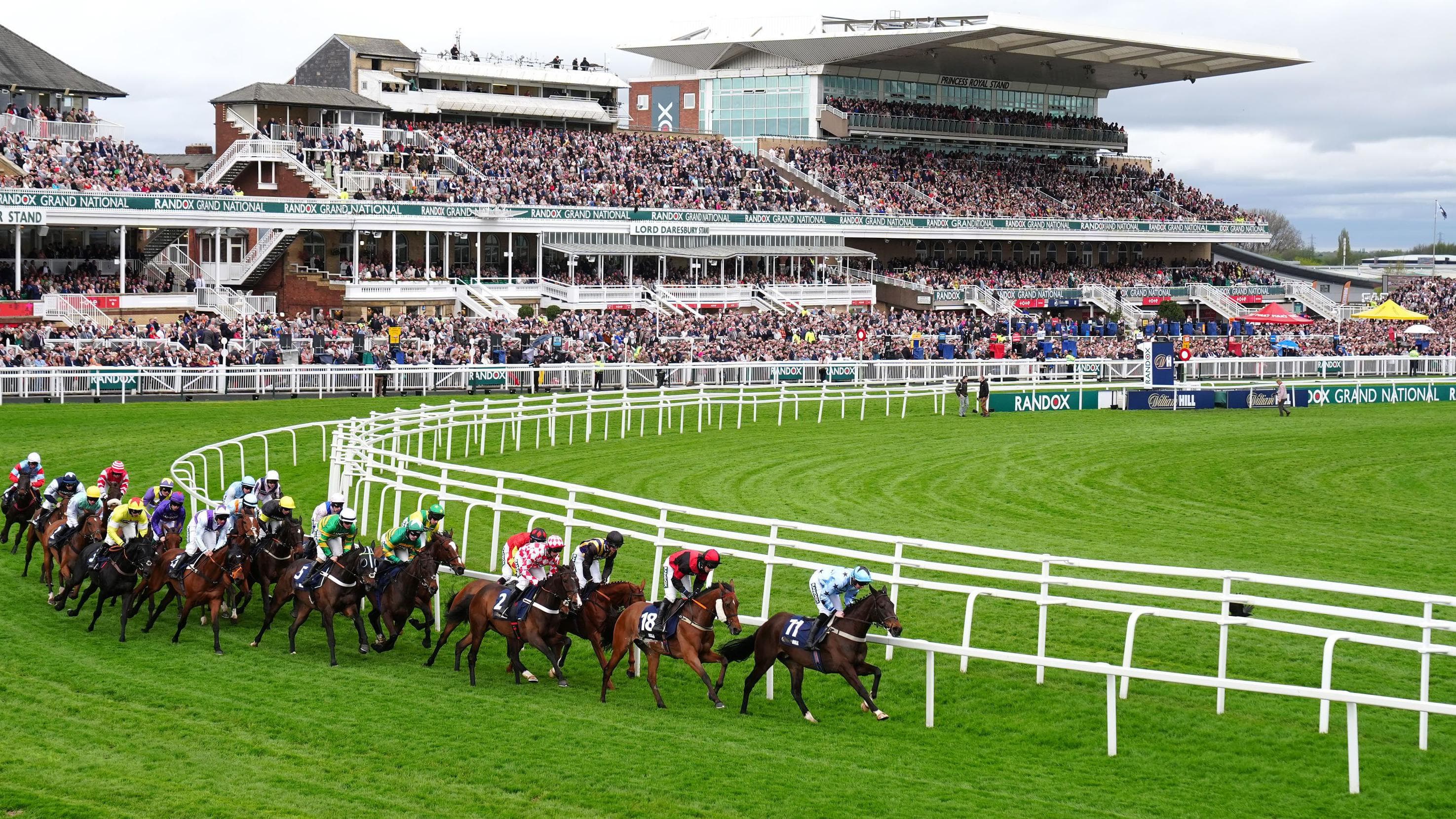
The race is rooted in Aintree, just outside Liverpool, where racing developed on land leased in the late 1820s. The wider Aintree story starts with local steeplechasing culture and a course that originally had far more of a rough cross-country feel than the modern National course does today. That matters because the National's identity was never meant to be a neat circuit race in the modern sense. It was built around obstacles, stamina and spectacle.
There is still debate around the earliest runnings. Races in 1836, 1837 and 1838 are now treated by many historians as important precursors and in some accounts as part of the event's true beginning. But the 1839 running, won by Lottery, remains the first official Grand National in standard records. That is the date most histories use, and it is the cleanest anchor for any modern explanation of the race.
Official start point
For most practical purposes, 1839 is treated as the first official Grand National. Earlier Aintree steeplechases matter historically, but 1839 is the recognised starting point in standard race records.
How the race became recognisably modern
One of the most important early shifts came in 1843, when the race moved from a weight-for-age structure into a handicap. That change is central to the history of the Grand National because it helped turn the race into something broader than a straight championship for the best horse. It became a contest where weight, judgement, staying power and jumping efficiency all mattered in a more layered way.
That handicap structure is part of why the National became such a strong betting event. A pure class race tends to narrow public imagination. A handicap invites punters to weigh reputation against burden, profile against stamina, and market position against chaos. The possibility of a live outsider has always been part of the Grand National's commercial and cultural appeal.
| Era | Milestone | Why it mattered |
|---|---|---|
| 1830s to 1840s | Aintree steeplechases evolve into the official Grand National and become a handicap in 1843 | This set the foundations for the race's formal identity and betting appeal |
| 1916 to 1918 | War years push the race to Gatwick for alternative runnings | It showed the event's importance even when Aintree itself could not host it |
| 1950s to 1980s | Devon Loch, Foinavon, Red Rum and Aldaniti help build the race's modern mythology | These stories turned the National into a wider national event, not just a racing fixture |
| 1990s | The void 1993 race and the Monday running in 1997 underline how unusual the event can be | They added fresh folklore and showed how the National can spill into wider public life |
| 2010s to 2020s | Safety-driven course changes, welfare reforms and a reduced field reshape the modern race | The National kept its identity while adapting to a very different sporting environment |
Why Aintree's fences matter so much
Plenty of major races have long histories. Fewer have a course identity strong enough to live in the public imagination. The Grand National's fences gave the race that extra layer. Becher's Brook, Canal Turn, Valentine's and The Chair are not just technical features. They are part of the story engine that made the National feel different from every other Saturday handicap.
The race is currently run over 4 miles 514 yards, with two laps of the National course and 30 fences jumped. The names, angles and run-in shape how viewers remember the event. A horse can jump brilliantly for most of the way and still get found out late. A front-runner can clear the last and still be caught on the elbow and long home run. Those features helped create the National's reputation as a race where drama is structural, not accidental.
The stories that made the race famous
Devon Loch in 1956
The 1956 National remains one of the defining pieces of British sporting folklore because Devon Loch appeared certain to win before collapsing on the run-in just short of the line. E.S.B. inherited the race, but the name most people remember is Devon Loch. That alone tells you something important about the history of the Grand National: the event has always rewarded memory, not just statistics.
Foinavon in 1967
Foinavon's 100/1 win in 1967 came after chaos at the 23rd fence, where a pile-up blocked much of the field and allowed a rank outsider to avoid the worst of it and go clear. That fence was later named after him. The episode became one of the clearest illustrations of why the National captures casual bettors so effectively: the race can still produce a result that sounds impossible until you remember the shape of the test.
Aldaniti and Bob Champion in 1981
The 1981 success of Aldaniti and Bob Champion gave the race one of its most emotional modern victories. Champion had recovered from cancer, Aldaniti had overcome serious problems of his own, and the story moved far beyond racing pages. It is one of the best examples of the National turning into mainstream national drama rather than remaining a niche sporting event.
Why these moments matter
The Grand National's public power does not come just from age or prize money. It comes from repeatable, memorable stories that even non-racing audiences recognise decades later.
Red Rum and the race's most important legend
No history of the Grand National works without Red Rum. He won in 1973, 1974 and 1977, and also finished second in 1975 and 1976. That three-win record still stands alone. The 1973 victory, when he ran down Crisp after looking beaten, is often treated as the most famous National of all. It turned Red Rum into much more than a racehorse. He became the image of Aintree itself.
Red Rum mattered for another reason too. In the difficult 1970s, when the future of Aintree and the race did not feel entirely secure, his popularity helped keep the National in the centre of public attention. That is why some race histories describe him as the horse that saved the Grand National. Whether you treat that literally or symbolically, the point is defensible: he gave the race a public hero at a moment when it badly needed one.
War, disruption and the race that nearly did not happen
The National's history is not a smooth annual line. During the First World War, alternative races were staged at Gatwick rather than Aintree. During the Second World War, the race disappeared entirely from 1941 to 1945 because the course was requisitioned. Those gaps matter because they show how unusual it is that the event still feels so continuous in the public mind.
The post-war era produced its own extraordinary interruptions. In 1993, communication failures after a false start led to the race being declared void, even though horses completed the course. In 1997, an IRA bomb threat forced evacuation and moved the National to the Monday. In 2020, the race was not run because of the pandemic. Each time, the fact that the disruption itself became part of the event's folklore showed how central the race is in the sporting calendar.
How welfare changes reshaped the modern National
Any honest history of the Grand National has to include welfare. The race's scale, fence profile and public visibility have made it a permanent focus for debate. Over time Aintree and the sport have altered fence construction, landing areas, veterinary support and qualification rules in an effort to reduce risk while retaining the National's character.
That process accelerated in the modern era. Fence cores became more forgiving, parts of the course were adjusted, and later reforms reduced the field size from 40 to 34 from the 2024 running. Whether every racing fan agrees with each specific change is a separate issue. The broader historical point is simpler: the modern Grand National is not a museum piece. It is a living sporting event that has had to adapt to survive.
Why the race still matters to bettors
The history of the Grand National still matters to bettors because the race remains one of the few horse races that reliably pulls in people who barely touch racing at other times. That changes the market atmosphere. Bookmakers market the race aggressively, public sentiment becomes part of the narrative, and casual money often lands on names, stories, colours and memories as much as on form study.
That does not make the race easy to bet. If anything, it is a reminder that the National sits at the intersection of sport, nostalgia and mass-market betting. Understanding the history helps because it explains why the race is covered differently, priced differently in the public imagination and discussed differently from a normal staying handicap chase. It also explains why every new winner joins a story much older than the result itself.
- The handicap format keeps the race open enough to attract wide betting interest.
- Its public familiarity means narrative-backed horses often attract plenty of casual support.
- The fences and distance make completion, not just raw ability, a major part of the puzzle.
- Historical moments still shape how the race is marketed and how casual punters approach it.
Related racing guides
If you want more racing context around the National, read National Hunt vs Flat Racing and our guide to the most famous horse races in the UK and Irish calendar.
Grand National History FAQ
These are the questions most readers ask when they want the history of the Grand National in plain English rather than racing folklore alone.
When was the first Grand National run?
The first official Grand National is generally recognised as the 1839 running at Aintree, although important precursor races took place in 1836, 1837 and 1838.
Why is the Grand National so famous?
Because it combines age, unusual fences, a long-distance handicap format, major television reach and a long history of dramatic stories that resonate beyond regular racing audiences.
Why is Red Rum so important in Grand National history?
Red Rum remains the only horse to have won the race three times, and his 1970s runs helped turn the National into a much bigger public event during a difficult period for Aintree.
Was the Grand National always run every year?
No. There were wartime interruptions, a void race in 1993, a Monday running in 1997 after a bomb threat, and no race in 2020 because of the pandemic.
How has the race changed in modern times?
Modern organisers have altered fences, landing areas, veterinary procedures and field size in response to welfare concerns, while trying to preserve the race's distinctive Aintree identity.
Conclusion: why the history of the Grand National still matters
The history of the Grand National still matters because the race is not just another old sporting event that happens to survive. It has kept renewing itself while carrying a huge amount of inherited meaning: the 1839 official beginning, the handicap tradition, the famous fences, the folklore of Devon Loch and Foinavon, the unmatched pull of Red Rum, and the modern argument about how a historic race should evolve. That combination is why Aintree still feels different every spring. The National is not just part of racing history. It is part of British sporting memory.